Open-water swimming in Florida
Florida swims year-round: Gulf and Atlantic beaches, the calm water of the Keys, and freshwater springs that hold around 72°F all year. These are the places swimmers actually train and dip, with live conditions, water quality and the best time to go.
Best water right now
SwimScore out of 100 for a typical swimmer, updated .
The spots swimmers actually use
Researched one by one — access, lifeguards, water quality and hazards — with a live SwimScore.

Siesta Beach
Siesta Beach's 99% quartz sand runs into shallow Gulf water with sandbars close to shore, so you're usually within about ten strokes of standing depth. The Meet Me at Blue group swims about 1.2 miles along the buoy line from the blue lifeguard stand at 7 a.m. three mornings a week, year-round. Stay inside the buoys; parasail boats work the water beyond them.

South Beach (South Pointe)
The south end of South Beach, from South Pointe Park up past 1st Street, is where many Miami Beach swimmers get in, with open Atlantic water and guarded sand running north toward Lummus Park. Local open-water groups meet here, and calm mornings are the time to go. Lifeguards work 9 a.m. to 7 p.m.; on strong onshore-wind days, watch for rip currents and stay near a staffed tower.

Clearwater Beach
Clearwater Beach is 2.5 miles of white sand on a barrier island, and the Gulf here shelves gradually and usually runs calmer than Florida's Atlantic side. Lifeguards staff the main public beach year-round, and the city hosted the IRONMAN 70.3 World Championship from 2006 to 2010. Head for a garage rather than circling the Pier 60 lot, which fills first.

Blue Spring State Park
Blue Spring feeds a clear run of 72°F water that flows into the St. Johns River, and on summer days swimmers float it alongside schools of fish. From mid-November through March the run belongs to hundreds of wintering manatees and is closed to all water activities, so swim season runs April to mid-November. Since July 2026 every visitor needs a day-use reservation, so book before you go.

Fort De Soto Park – North Beach
North Beach is the main swim center at Fort De Soto, Pinellas County's largest park, a Gulf-facing stretch of white sand near the mouth of Tampa Bay reached by a toll road. Integrity Multisport's Fort De Soto Triathlon Series holds its quarter- and half-mile swims here. Swim only in the marked areas; lifeguards cover them from April through September.

Crandon Park Beach
Crandon's two-mile beach on Key Biscayne sits behind an offshore sandbar that knocks down most of the surf, so the water inside is usually calm and shallow. Many swimmers head out to the bar and swim or wade along it. The bar shifts with storms, flotation devices aren't allowed, and parking is $7 plus tax Monday to Thursday, $10 Friday to Sunday.

Sandspur Beach, Bahia Honda State Park
Sandspur is the Atlantic-facing beach on the east side of Bahia Honda Key, where the water stays shallow and the currents are usually mild, so easy laps parallel to shore are the norm. Expect mid-to-upper 80s in summer and low-to-mid 70s in winter. Give the Bahia Honda Channel a wide berth, since its currents can run very swift, and come early because the park closes when it fills.

Casino Beach, Pensacola Beach
Casino Beach is Pensacola Beach's main Gulf beach, just past the Bob Sikes Bridge toll plaza under the beach-ball water tower, with free parking and lifeguards beside the Gulf Pier. The guards are on the stand daily from late February, adding towers by Memorial Day. When the Gulf is rough, cross the island to Quietwater Beach on Santa Rosa Sound, home of DeLuna's Open Water Swim.

Ichetucknee Springs Headspring
Ichetucknee's headspring, at the park's North Entrance, is one of two springs where swimming is allowed: a clear 72°F pool at the top of a six-mile river fed by eight major springs. The springs reach up to 40 feet deep, so it suits confident swimmers and snorkelers. Nearby Blue Hole is for experienced swimmers only; arrive early, as weekends and holidays often hit capacity.

Fort Lauderdale Beach (Sebastian Street)
Fort Lauderdale's central beach runs along the two-mile wave wall and beachfront promenade, with open Atlantic water off guarded sand. The Swimming Hall of Fame and the Aquatic Center, home of a big Masters team, sit a short walk south, and the Swim Fort Lauderdale Beach races ran here from 2015 to 2018. Lifeguards are on duty every day, so swim between the towers.

Henderson Beach State Park
Henderson Beach State Park keeps more than a mile of natural Gulf shoreline in Destin, reached by boardwalks over the dunes, with white sand and green water for long swims parallel to shore. Cold rinse showers sit next to the day-use restrooms. Since May 2026 every visitor needs an online day-use reservation, so book before you drive over.

Wekiwa Springs State Park
Wekiwa Spring fills a half-acre swimming area about four feet deep on average, holding near 72°F all year, with a grassy slope for picnics just minutes from downtown Orlando. It suits easy laps and a long cool-down rather than distance, since the spring run and Wekiva River are closed to swimmers. Day-use entry requires a reservation, so book before you drive.

Delray Beach Public Beach (Atlantic Avenue)
Delray's municipal beach spreads out from the pavilion at the east end of Atlantic Avenue, a wide, guarded stretch of sand facing open Atlantic water. Ocean Rescue staffs the towers every day of the year from 9 a.m., until 6:30 p.m. in daylight saving time and 5 p.m. in winter. Rip currents are the main hazard and kiteboarders launch south of the guarded area, so swim near a tower.

Ginnie Springs
Ginnie Spring's basin is about 90 feet across and 12 feet deep, 72°F all year, with cavern openings below that make it a classic dive site. It is one of seven springs in this private park on the Santa Fe River, where snorkelers explore the pools and tubers float the river. Sign the waiver and buy a day pass online; summer weekends push day visitors to overflow lots.

Rainbow Springs State Park
Rainbow Springs, the source of the Rainbow River and the fourth-highest-flowing spring in Florida, has a buoyed swimming area 10 to 18 feet deep in 72°F water. It is deep right away, so it suits steady swimmers and snorkelers more than waders. Inflatables are not allowed, and since April 2026 every visitor needs a day-use reservation before arriving.

Grayton Beach State Park
Grayton Beach State Park has a mile of white sand between the Gulf and Western Lake, one of the coastal dune lakes this part of the Panhandle is known for. There are no lifeguards, so swim with a partner and stay close to shore when the surf is up. In busy periods the park often reaches capacity and closes to day visitors for hours at a time, so an early start matters.

Lido Beach
Lido Beach is the main public beach on Lido Key, with year-round Sarasota County lifeguards, a pavilion with food and a public pool at the park for days when the Gulf is too rough. Swim parallel to shore inside the guarded area. Before you go, check the flags and visitbeaches.org, where lifeguards and Mote Marine staff update conditions twice a day.
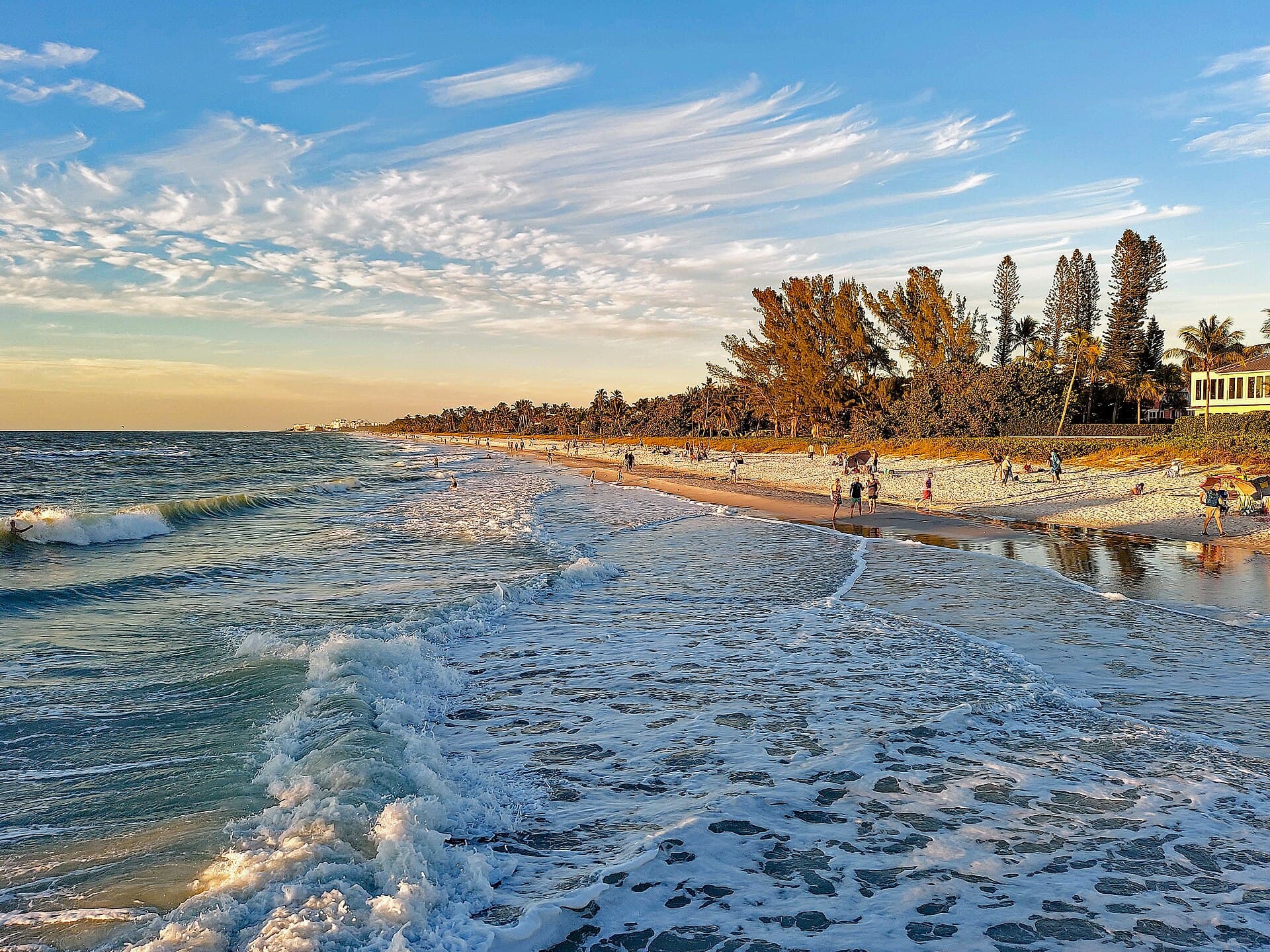
Naples Beach at the Pier
The Naples Pier juts 1,000 feet into the Gulf along the city's nearly nine miles of beach, and it makes a handy marker for out-and-back swims along the shore on either side. The pier was badly damaged by Hurricane Ian in 2022, so check the city's updates on pier and beach-access closures before you go. Red tide can reach this coast, most often in late summer and fall.

Bill Baggs Cape Florida State Park
At the southern tip of Key Biscayne, Bill Baggs has a mile and a quarter of natural Atlantic beach open to swimming, with the 1825 Cape Florida Lighthouse at its end. There are no lifeguards, so swim with a partner and know your limits. The park opens at 8 a.m. and closes to all entry once it fills on busy weekends, so arrive early.

Fort Zachary Taylor Beach
Locals call it Fort Zach or rocky beach, and the state park bills it as the best swimming in Key West: shallow enough to stand, deep enough for real laps, with breakwaters full of fish. The bottom is rocky, so wear water shoes. It sits beside the main shipping channel, whose currents keep the water clear; stay inside the swim buoys, well away from the boat traffic.

Anastasia State Park
Four miles of undeveloped Atlantic beach sit inside Anastasia State Park, just across the bridge from St. Augustine. A lifeguard watches a designated swim area at the beach ramp behind the Island Beach Shop and Grill from Memorial Day to Labor Day; the rest is open beach break that surfers favor. Arrive early on busy weekends and holidays, when the 350-space lot can fill.

Cocoa Beach Pier
The 800-foot Cocoa Beach Pier anchors a long stretch of Atlantic sand, and Brevard County keeps a lifeguard tower here year-round, staffed 10 a.m. to 5 p.m. Surfers work the waves around the pier, so swimmers do best in the guarded water in front of the tower. City street-end lots along the beach are paid by app, so plan for parking.

Alexander Springs
Alexander Springs is a first-magnitude spring in the Ocala National Forest where a gently sloped beach runs into a broad, sand-bottomed basin that stays about 72°F. The easy entry and wide open water make it good for relaxed laps, snorkeling and families, and it is the only spot in the forest where scuba diving is allowed. Weekends fill up, so have a backup plan.

Russell-Fields City Pier, Panama City Beach
The beach at Russell-Fields City Pier is where IRONMAN Florida swims its two-loop, 2.4-mile course around the pier each November, which makes it the natural rehearsal spot for Panhandle triathletes. The pier gives you an easy sighting line out and back. Conditions swing from smooth to choppy with the wind; check the flags first, since a double red closes the water with a $500 fine.

Hollywood Beach (Broadwalk)
Hollywood's beach runs beside the 2.5-mile brick Broadwalk, with open Atlantic water guarded year-round from 9 a.m. to 6 p.m. and showers and restrooms along the promenade. Harrison Street sits near the busy middle of it. Paddleboards and kayaks may use the whole beach before 10 a.m. and after 5 p.m., so early swimmers should wear a bright cap.

Madison Blue Spring State Park
Madison Blue wells up into a limestone basin about 82 feet wide and 25 feet deep on the west bank of the Withlacoochee River, then runs 150 feet to the river. Shallow sections under 5 feet suit kids, the deeper water rewards stronger swimmers, and certified cave divers head below. On weekends and holidays the park often closes at capacity between 10 a.m. and 3 p.m., so arrive early.

Juniper Springs
Juniper Springs is a 1930s Civilian Conservation Corps pool in the Ocala National Forest, shallow at one end and deep enough to jump into at the other, fed by spring water that stays around 72°F beside an old mill house. Tapegrass covers the bottom and American eels sometimes turn up. There is no potable water on site, so bring your own, and expect crowds on weekends.

Honeymoon Island State Park
Honeymoon Island State Park has about four miles of Gulf shoreline two miles west of Dunedin, with designated swimming areas on the main beach and showers by the boardwalks. There are no lifeguards, so swim with a buddy and check the flag signs at the entrance. Stay out of the water at the north sandspit, where a cut has opened with deep water and strong currents.

North Shore Beach
North Shore Beach is a sandy strip on Tampa Bay in downtown St. Petersburg, beside the year-round North Shore pool and the palm arboretum. It's where the St. Anthony's Triathlon starts its sprint and Olympic swims each April. The city tests its swimming beaches weekly for enterococci, so check the latest results before you get in, especially after heavy rain.

Manatee Public Beach
Manatee Public Beach is the central Gulf beach on Anna Maria Island, with soft white sand and a lifeguard tower staffed every day of the year. From Memorial Day to Labor Day the guards stay until 7 p.m., which leaves time for a guarded after-work swim. There are showers, changing cabanas and a concession; after summer rains the lot often floods.

Sanibel Lighthouse Beach
Lighthouse Beach sits at the eastern tip of Sanibel beneath the 1884 cast-iron lighthouse, with a Gulf-side beach for swimming and gentler San Carlos Bay water around the point. The island's east-west shape brings in a lot of shells, so water shoes help. Parking is $5 an hour around the clock, and the park page warns that hurricane debris may still be buried along the shore.

New Smyrna Beach – Flagler Avenue
Flagler Avenue is the heart of New Smyrna's beach, with a county lifeguard tower, showers and a stretch of sand where cars are allowed in marked zones. This is a surf town, and the water toward the inlet runs deeper with stronger current, so the open beach near a staffed tower is the place to swim. Watch the posted flags, and remember rip currents can form even when the sea looks calm.

Daytona Beach – Main Street Pier
Daytona's wide, hard-packed beach runs for miles either side of the Main Street Pier, and the lifeguard stands post the day's water temperature, tides and surf. The city keeps a 300-foot no-water-activity zone around the pier and sets surfing areas nearby in summer, so enter the water well away from both. Cars share parts of the sand, so look both ways on your walk down.

Lake Minneola – Clermont Waterfront Park
This sandy city park on the south shore of Lake Minneola is a triathlon hub: the Great Clermont Triathlon's 1.5K course loops out from here, and the Clermont Triathlon Club runs free group swims off the beach. The lake looks brown up close and blue from a distance. Swim in daylight, as Florida wildlife officials advise for lakes with alligators, and go with the group rather than alone.

Wakulla Springs
Wakulla Spring is one of the world's largest and deepest freshwater springs, and swimmers get a designated area beside it plus a 22-foot dive and observation tower for anyone who wants the jump. The water stays around 69 to 70°F. Manatees and alligators live in these waters, so keep to the swim area, which closes whenever thunderstorms threaten.

Phil Foster Park (Blue Heron Bridge)
Phil Foster Park sits on an island under the Blue Heron Bridge in the Lake Worth Lagoon, with a guarded swim beach and a two-acre snorkel trail of limestone boulders and reef modules in 6 to 10 feet of water. Divers and snorkelers come for the small marine life. Go around slack high tide, when the current eases, and stay inside the swim area away from boats.
Bathtub Reef Beach
At low tide a worm-built reef just offshore breaks the swell and leaves a shallow, sheltered pool along the sand, which is why families and new snorkelers come here. The effect is strongest in the calmer spring and summer seas; fall and winter swells can push over the reef and set up currents inside it. Go near low tide, stay off the fragile reef, and swim while the guards are on duty.

DuBois Park Lagoon
DuBois Park wraps a small, sheltered lagoon on the south side of the Jupiter Inlet, an easy place for short swims and snorkeling with the red inlet lighthouse across the water. Guards cover the lagoon daily during school summer break and on weekends the rest of the year. Boats and inlet currents run just outside, so stay inside the guarded area.

Sombrero Beach
Marathon's city beach sits at the very end of Sombrero Beach Road, a stretch of Atlantic-facing sand backed by a shady park with pavilions, restrooms and showers. It opens at 7 a.m., which suits a swim before the day heats up. From April through October loggerhead turtles nest here, so expect a few roped-off areas along the sand and give them room.

Cannon Beach, John Pennekamp Coral Reef State Park
The country's first undersea park has two small, human-made beaches: Cannon Beach, where artifacts from an early Spanish shipwreck sit about 100 feet offshore, and Far Beach, a relaxed spot to swim or sit under the palms. Stay inside the designated swim areas unless you tow a diver-down flag. On weekends the park closes for a while once its 351 parking spaces fill, so arrive in the morning.

St. Andrews State Park Jetty Lagoon
Next to the Jetty Store at St. Andrews State Park, the inlet lagoon sits inside the rock jetties at the pass into St. Andrews Bay, and the rocks draw enough fish that swimmers bring a mask. For open Gulf water, the surf beach is on the other side of the Jetty Store. Entry is $8 per vehicle, with outdoor showers and restrooms at the day-use parking areas.

St. George Island State Park
Dr. Julian G. Bruce St. George Island State Park covers the undeveloped east end of the island, with nine miles of beach and about four reachable from the main park drive. The Sugar Hill and East Slough use areas have Mobi-Mats, pavilions, restrooms and cold rinse showers. There are no lifeguards, so read the posted warning flags and keep swims close to shore when the Gulf is up.

Deerfield Beach (International Fishing Pier)
Deerfield Beach centers on its 1,000-foot International Fishing Pier, with about a mile of sand guarded by nine lifeguard towers from morning into early evening. North of the pier is the surfing zone, so most swimmers stay on the south side near Tower 7. Rip currents are the main hazard; give the pier pilings a wide berth.

Lauderdale-By-The-Sea (Commercial Boulevard)
Lauderdale-By-The-Sea calls itself Florida's beach diving capital: the first of three coral reef tiers lies about 100 yards off the sand, so a short swim puts you over live reef. There are no lifeguards, rocks and reef sit close to shore, and boats pass nearby. Calm mornings are best; tow a bright buoy and swim with a partner.

Higgs Beach
Higgs Beach is Key West's beach park along Atlantic Boulevard, with the Reynolds Street Pier, picnic spots and courts behind a strip of Atlantic sand. The 12.5-mile Swim Around Key West started here in 2026, so long-distance swimmers know this shoreline well. Bring a mask, since the park is known for swimming and snorkeling close to shore, and use the pier as an easy sighting mark.

Jacksonville Beach – Beach Boulevard
Jacksonville Beach is home water for the Duval Ocean Swimmers, who have swum more than a mile here every morning for nearly 30 years, and the HammerHead Ocean Marathon finishes by the historic lifeguard station at the end of Beach Boulevard each August. Towers are staffed seasonally, so check the flag and ask the guards about rip currents before you head out.

Main Beach Park, Fernandina Beach
Main Beach is Amelia Island's classic beach park, with four lifeguard stands, restrooms, outdoor showers and a long boardwalk along the shore. The Atlantic here is open surf, and the guarded water in front of the park is the place to swim from May weekends through Labor Day. Check the warning flag before you go in; rip currents are the main hazard on this open coast.

Sebastian Inlet State Park – Tidal Cove
The tidal cove on the north side of Sebastian Inlet is the park's calm-water option: a protected pocket with a hard bottom and gentle slope, looking out at the inlet and jetties. It's the fallback when the Atlantic surf is too big, but depths run from inches to about 15 feet and no lifeguards are posted. Swim with a buddy and stay well clear of the boat channel and the bridge.

Ponce de Leon Springs State Park
Ponce de Leon Springs pushes about 14 million gallons a day into a spring pool that holds a brisk 68°F all year, then flows down its run to meet the tea-colored water of Sandy Creek. It is a place for cooling off and easy laps rather than distance. Warm weekends bring crowds and capacity closures, and when the ranger station is unstaffed you pay at the honor box with correct change.
Local guides
Best Florida Springs for Swimming: A Local Guide
Where to swim in Florida's springs: water temperatures, reservations, capacity closures, manatee season, tubing rules and cave safety at 10 popular springs.
How to Check Florida Beach Water Before You Swim
Check a Florida beach before you swim: Healthy Beaches bacteria results, FWC red tide map, beach warning flags, rip current forecasts and advisories after rain.
Free · weekly · no account
The week’s best swims in Florida
Every Monday: which day looks best at the hand-checked spots, scored from the forecast. One email a week, unsubscribe any time.