Wild swimming in the UK
Britain’s wild-swimming culture runs from Hampstead’s ponds and art deco lidos to Cornish sea pools, Lake District lakes and Scottish lochs. Every spot comes with conditions, tides and official bathing-water quality where it’s measured.
Best water right now
SwimScore out of 100 for a typical swimmer, updated .
The spots swimmers actually use
Researched one by one — access, lifeguards, water quality and hazards — with a live SwimScore.

Kenwood Ladies' Pond, Hampstead Heath
A women-only bathing pond on the east side of Hampstead Heath, set aside for women and girls since 1926 and ringed by trees and reeds. The water is deep and opaque, with tethered life rings to rest on and lifeguards on duty every day of the year. In summer the afternoon and evening sessions are booked online up to a week ahead, so the 7am to 11am drop-in is the simplest way in.

Hampstead Heath Mixed Pond
The only one of the three Hampstead Heath bathing ponds open to everyone, the Mixed Pond is the top pond of the Hampstead chain near East Heath Road, and it opens from April to October. The water is deep, opaque and lifeguarded, and floats, masks and snorkels are not allowed. Hampstead Heath station is about ten minutes' walk; on hot days drop-in sessions fill fast, so arrive early.

Highgate Men's Pond, Hampstead Heath
Men have swum in this pond off Millfield Lane for more than 150 years, and it stays open with lifeguards every day of the year. The water is deep and opaque, reached by a jetty and ladders, and a low diving board remains from the days of the old tower. If you are new to winter swimming, follow the City's advice: keep the first dips short, avoid diving in, and warm up slowly afterwards.

Tooting Bec Lido
At 91 metres long, Tooting Bec Lido is the UK's largest freshwater pool by surface area, and its unheated water has drawn swimmers to Tooting Bec Common since 1906. Summer brings busy public sessions; from October to April it belongs to South London Swimming Club members, who swim widths through the winter. Book summer slots in advance and lower yourself in slowly when the water is cold.

Jubilee Pool, Penzance
Penzance's 1935 art deco lido is a vast triangle of seawater on Battery Rocks. The main sea pool is unheated and runs close to the sea's own temperature, while a smaller geothermal pool is held at 28–30°C, and a sauna sits alongside for warming up after a cold dip. Book geothermal sessions ahead in summer and check for the fortnightly drain-down closures.

Tinside Lido, Plymouth Hoe
A 1935 semicircular saltwater lido below Plymouth Hoe, looking straight out across Plymouth Sound. The water is treated but unheated, so it warms only with the sun, and the deep section reaches about 2.3m. Sessions sell out on hot weekends and in the holidays, so book ahead; early mornings are quieter, while sunny afternoons usually bring warmer water.

Bude Sea Pool
A semi-natural tidal pool built into the rocks below the cliffs at Summerleaze in 1930, about 90m long and refilled by the sea twice a day. It is free, needs no booking and is swum year-round by a loyal local crowd, with water from around 11°C in April to 18°C by late summer. Swim at low tide and never dive in: shifting sand and stones change the depth.

Dover Harbour Beach
The sheltered shingle beach inside Dover's harbour walls is where English Channel hopefuls log their long training swims, in a buoyed swim zone that runs along the shore from April to October. The beach shelves steeply and ferry wash can arrive without warning, so stay inside the buoys, wear a bright hat and keep an eye on boats crossing to the slipway.

Parliament Hill Lido
Opened in 1938 and now Grade II listed, this 60-metre unheated lido on the edge of Hampstead Heath is open every day of the year, a few minutes' walk from Gospel Oak station. Its stainless-steel lining dates from a 2005 refurbishment. In summer the morning and afternoon sessions are bookable; in winter it opens from 7am to early afternoon, and a sauna runs through the colder months.

Serpentine Lido
The Serpentine Lido is a buoyed, lifeguarded swimming area in Hyde Park's lake, open to the public at weekends from mid-May and daily through summer. The lake has no natural inflow and is topped up from boreholes, and the Serpentine Swimming Club has swum here since 1864, Christmas Day included. Book ahead on hot days and check for blue-green algae notices before you travel.

Buttermere
Buttermere is a small National Trust lake with no motorboats or sailing boats, hemmed in by the High Stile ridge, Haystacks and Fleetwith Pike. Most swimmers get in at the village end, where the lakeshore path gives plenty of easy exits. Park at the pay-and-display car park just outside the hamlet, carry cash, and expect cold water even on a warm summer's day.

Blue Lagoon, Abereiddi
The Blue Lagoon is a flooded slate quarry just north of Abereiddi beach, opened to the sea when its channel was blasted; the slate gives the deep water its blue-green colour. It is busy with coasteering and kayak groups in summer, and there are no lifeguards. The National Trust closes the lagoon each autumn while grey seals are pupping, so check before you travel.

Durdle Door
A pebble beach beside the Jurassic Coast's famous limestone arch, reached by a steep fifteen-minute path down from the cliff-top car park. The water tests Excellent, but there are no lifeguards and the RNLI warns that currents quicken through the arch, so swim along the bay rather than towards it and never jump from the rocks. Early mornings are the quietest.

Brockwell Lido
Brockwell Lido is a Grade II listed 1937 pool in Herne Hill: 50 metres of unheated water, open all year and framed by its original 1930s buildings and café. Summer water runs in the low to mid twenties, while winter can drop to single figures and draws a loyal cold-water crowd. Since July 2026 it has been run by Lambeth Council's Active Lambeth, so book your swim through their site.

Windermere at Millerground
Millerground is a short stretch of wooded shore north of Bowness, with a shingle edge and an old stone landing that make getting into England's largest lake straightforward. Its bathing water has been rated Excellent. Windermere carries motorboats, yachts and lake cruisers, so stay close to the shore, wear a bright cap and tow float, and keep clear of the jetties and moorings.

Walpole Bay Tidal Pool
Built in 1937 and covering about four acres of the Cliftonville foreshore, Walpole Bay's concrete-walled tidal pool is thought to be the largest in the UK, refilled by every high tide and about two metres deep at the seaward end. Swim it once the tide has dropped below the walls; there are no lifeguards, toilets or showers, and regulars swim here right through the winter.

Clevedon Marine Lake
A 15,000-square-metre seawater lake built in 1929 on the Bristol Channel shore and topped up when big spring tides spill over its wall, so it holds water at every state of the tide. Most swimmers enter by the steps at the wooded end and swim along the sea wall, where it is deepest. It is free and unsupervised; stay out while the lake is overtopping.

Portobello Beach
Portobello's two-mile promenade fronts a wide, gently sloping sandy beach on the Firth of Forth, about three miles from Edinburgh city centre, and a club of year-round sea swimmers has used it since 2010. Water quality is rated Sufficient and can drop after heavy rain, so check SEPA's daily prediction, shown on the beach sign in summer, before getting in.

Brighton Beach (Palace Pier)
Brighton's steep shingle beach beside the Palace Pier is home water for Brighton Swimming Club, founded in 1860, whose sea section has used an arch just east of the pier since the 1870s and swims through the winter. Expect a sharp shore dump and sideways tidal currents: swim parallel to the beach, keep clear of the groynes and pier, and avoid high tide in a strong onshore wind.

Wastwater at Overbeck
England's deepest lake lies under the Wasdale Screes, with Great Gable closing off the head of the valley. There are no powered boats or sailing boats, so the pebbly shore near Overbeck is usually quiet, but at 79 m deep the water stays cold well into summer. Water shoes help on the stones, and the nearest toilets are at the National Trust's Lake Head car park.

Ullswater at Kailpot Crag
Kailpot Crag is a rocky, pine-topped knoll on Ullswater's quieter eastern shore, reached on foot along the lakeside path between Howtown and Sandwick. The water off the rocks is cold, and the Ullswater 'Steamers' work the lake all year, so wear a bright cap and tow a float. Look for the plaque to Lord Birkett, who led the fight to stop the lake becoming a reservoir.

Llyn Padarn
Llyn Padarn is a glacial lake up to 29 m deep beside Llanberis, with the Llanberis Lake Railway running along its far shore. It was designated a bathing water in 2014 and was rated Excellent in 2025. The south-western shore by the Lonely Tree, a short walk from the water sports centre car park, is an easy place to get in; watch for rowers and kayaks.
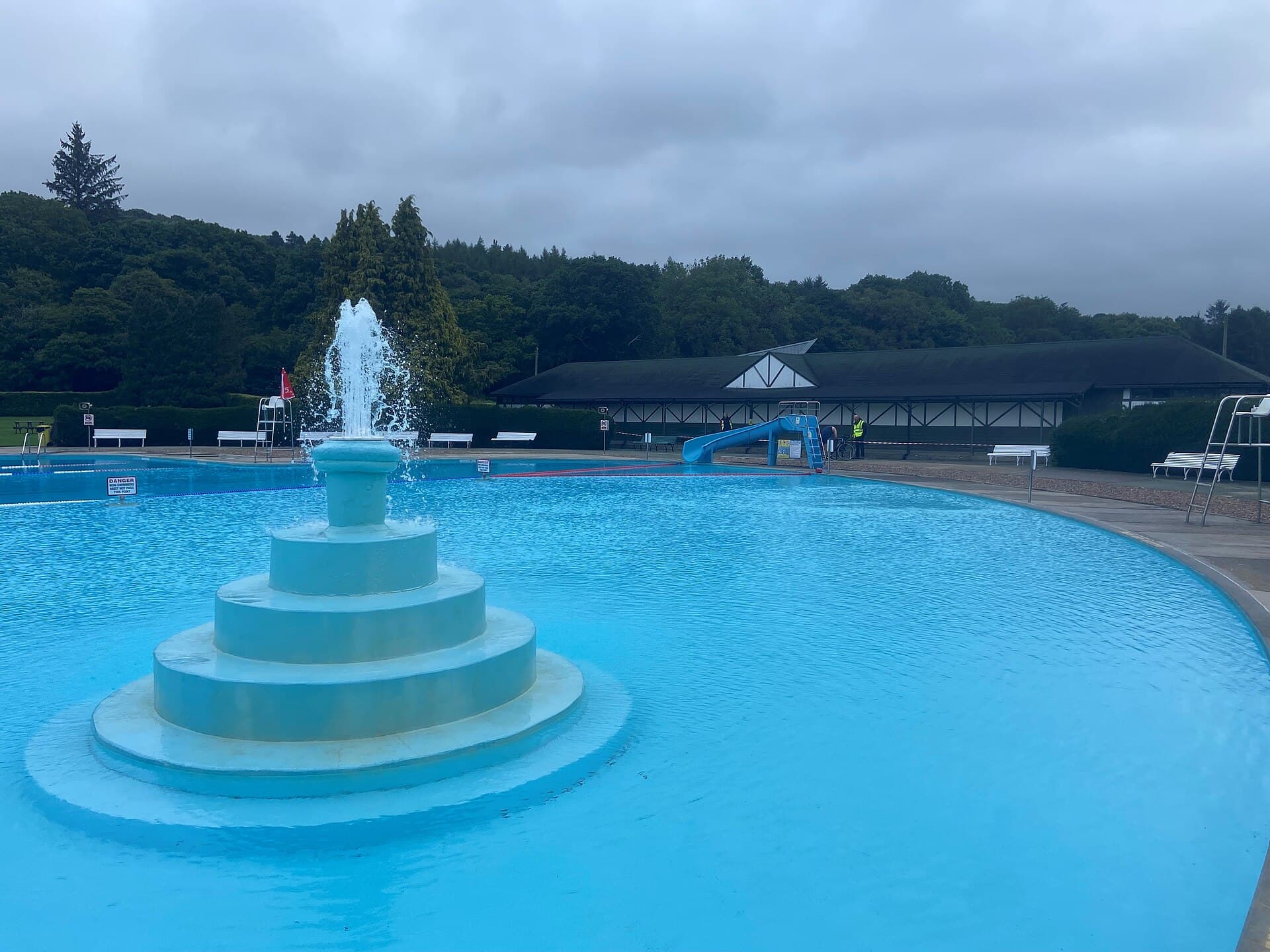
Ilkley Lido
Ilkley's 1935 lido is an unheated, mushroom-shaped pool: a shallow area for children and a deep circular basin 46 metres across, with its original fountain and Ilkley Moor rising behind. It opens from May to September and can draw thousands on hot days, so book ahead. If the weather turns, the heated indoor pool on the same site is a fallback.

Porthcurno
A south-facing cove of pale shell sand between granite headlands near Land's End, with the Minack Theatre on the cliffs to the west. On bright days the water is a vivid turquoise over white sand, but the beach shelves steeply and currents can be strong, so it rewards confident swimmers. In season swim between the RNLI flags, and allow for the steep path down from the car park.

Barafundle Bay
Barafundle is a sheltered, east-facing bay of fine golden sand backed by dunes and woodland, part of the National Trust's Stackpole Estate. There is no road to it: the walk in is about half a mile along the coast path from Stackpole Quay, ending in steep steps, and there are no facilities or lifeguards on the beach. Toilets and a café are back at the quay.
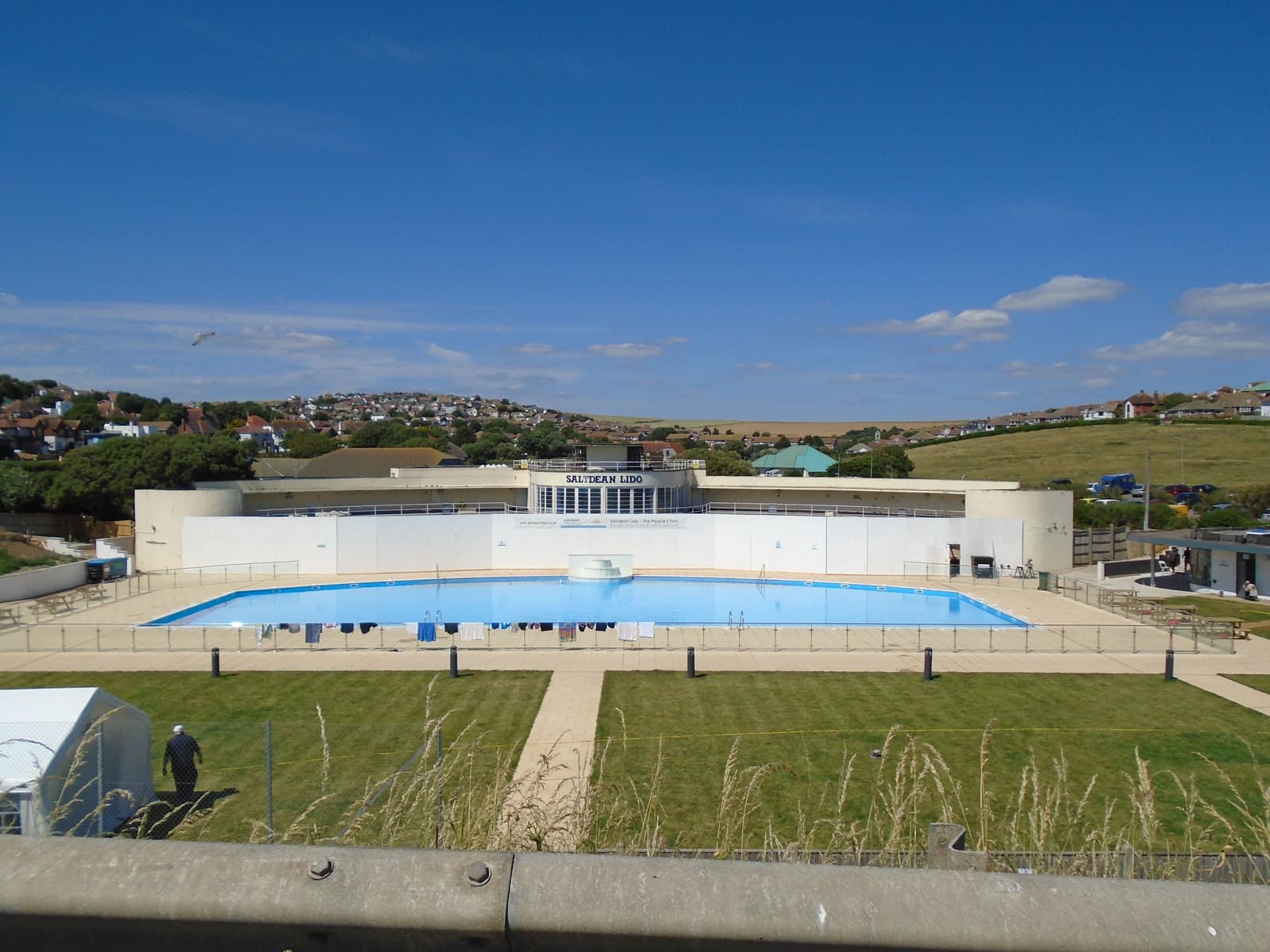
Saltdean Lido
Saltdean's crescent-shaped lido opened in 1938 and sits just across the coast road from the sea, a 40-metre heated pool in front of a Grade II* listed Art Deco building. The operator keeps the water at about 25°C in summer, so it suits steady lengths as well as family afternoons; check session times online before you go, and come by bus or along the Undercliff Walk on busy days.

Derwentwater at Crow Park
Crow Park is a grassy National Trust field on the shore of Derwentwater, a few minutes' walk from Keswick town centre, with views down the lake to Cat Bells and Derwent Isle. The Keswick launches and hire boats use the landing stages nearby, so keep close to the shore and away from the jetties. The bathing water here was rated Poor in 2024 and 2025, so check current notices first.

Loch Lomond at Milarrochy Bay
Milarrochy Bay is a pebbly bay on the quieter east shore of Loch Lomond, just north of Balmaha, and the national park itself names it as a popular place to swim. Loch depths can change suddenly, so walk in slowly and get used to the cold before you swim. Boats and anglers' trolling lines are about, so wear a bright cap, tow a float and stay close to the shore.
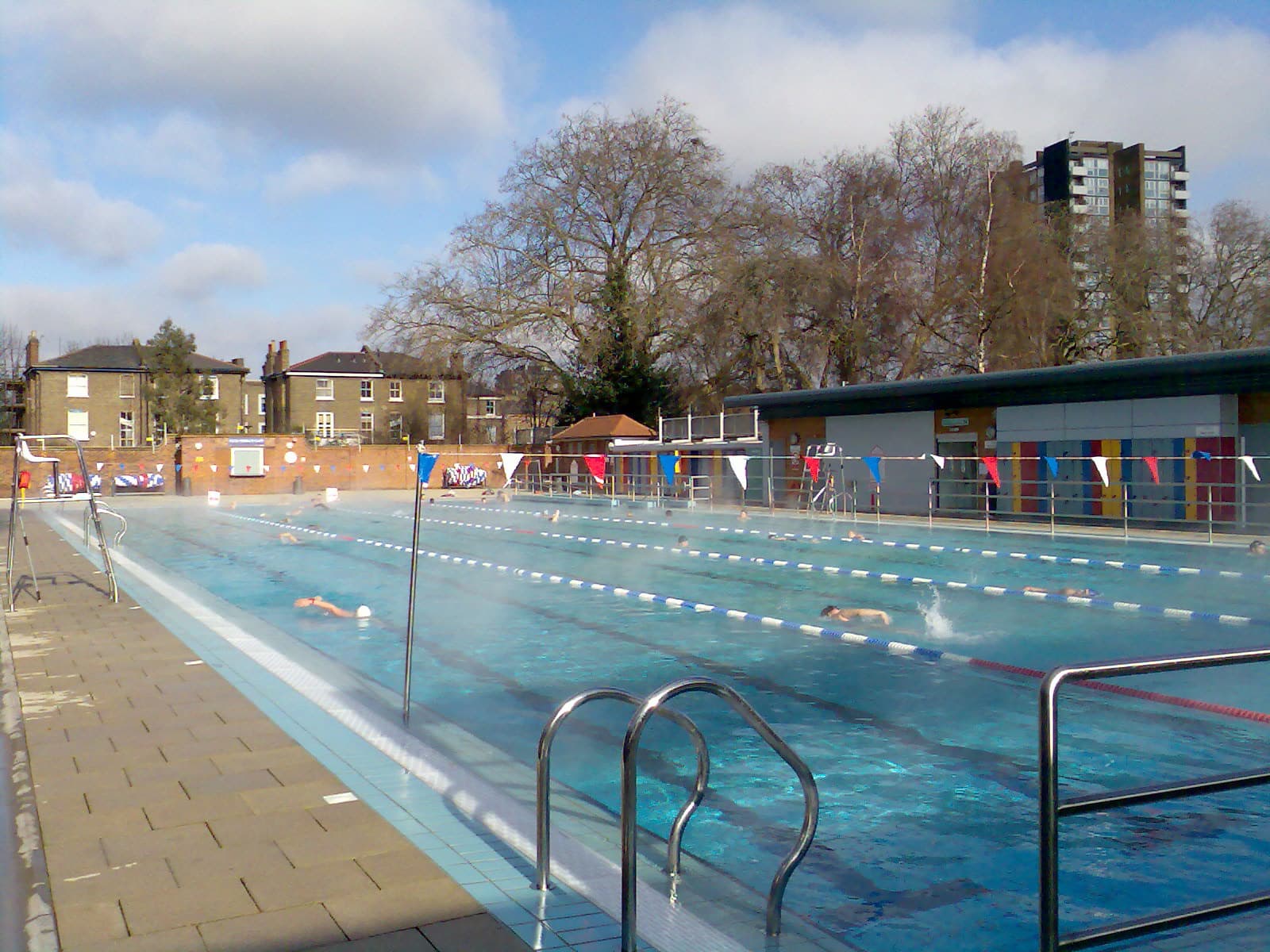
London Fields Lido
London Fields Lido is Hackney's heated 50-metre outdoor pool, first opened in 1932, shut in 1988 and brought back in 2006 after a long local campaign. Because the water is heated all year, it is a gentle way to keep swimming outdoors through the colder months, and the pool is floodlit for evening swims. Check Better's weekly timetable before you go, and bring a £1 coin for the lockers.

Tynemouth Longsands
Longsands is a 1.1 km sweep of fine sand between the site of Tynemouth's 1925 outdoor pool and Cullercoats, backed by grassy banks and a promenade. Both the north and south sections were rated Excellent for water quality in 2024 and 2025. It is an easy trip from Newcastle on the Metro, and there are public toilets at each end of the beach.
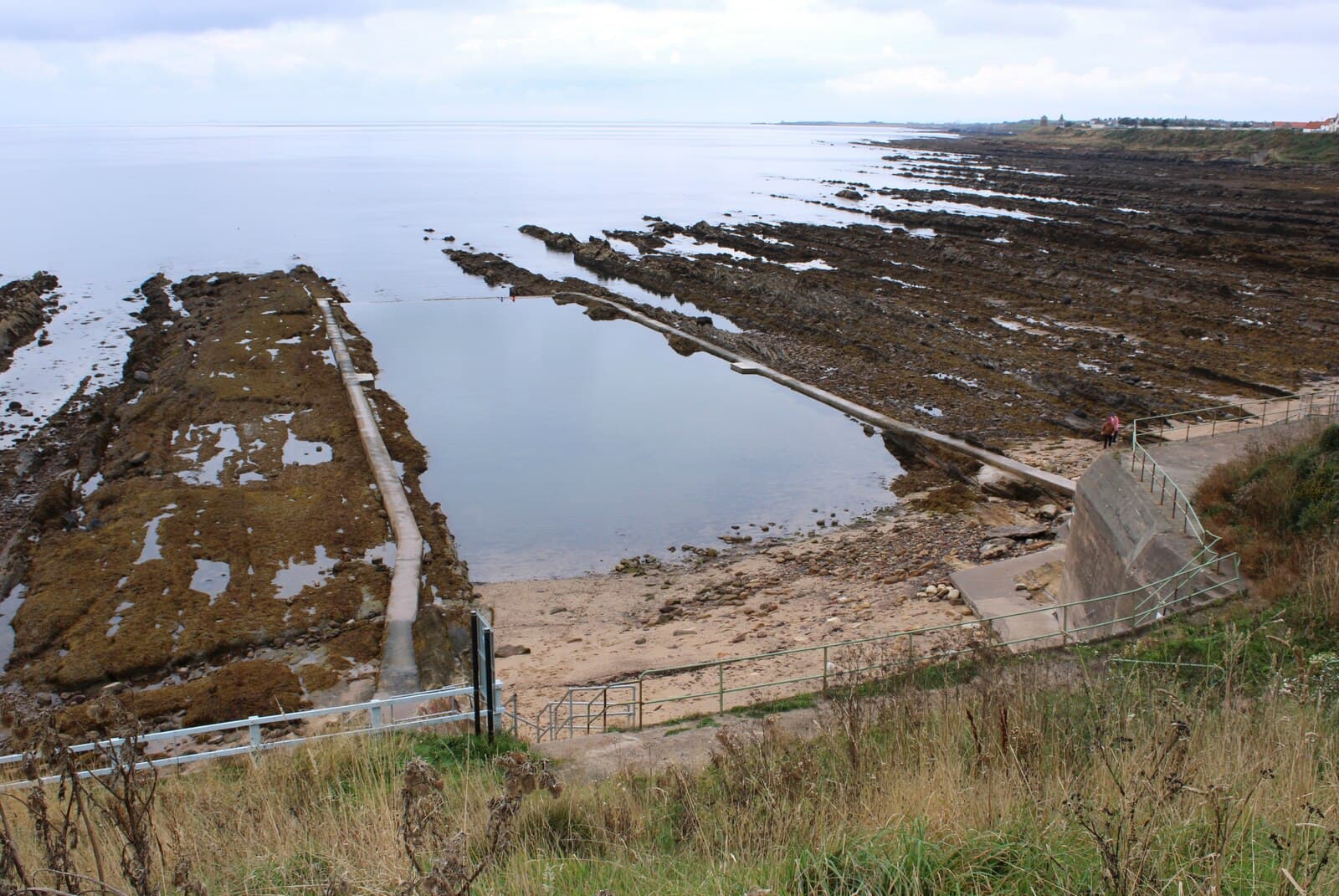
Pittenweem Tidal Pool
Pittenweem's tidal pool is a walled rectangle of seawater set into the rock shelves below the West Braes, on the western edge of the village, topped up by the sea at high tide and still full when the tide is out. It is cared for by the volunteer West Braes Project rather than the council, so there are no lifeguards: enter slowly and learn the depths and exits first.
Port Meadow & Wolvercote Mill Stream
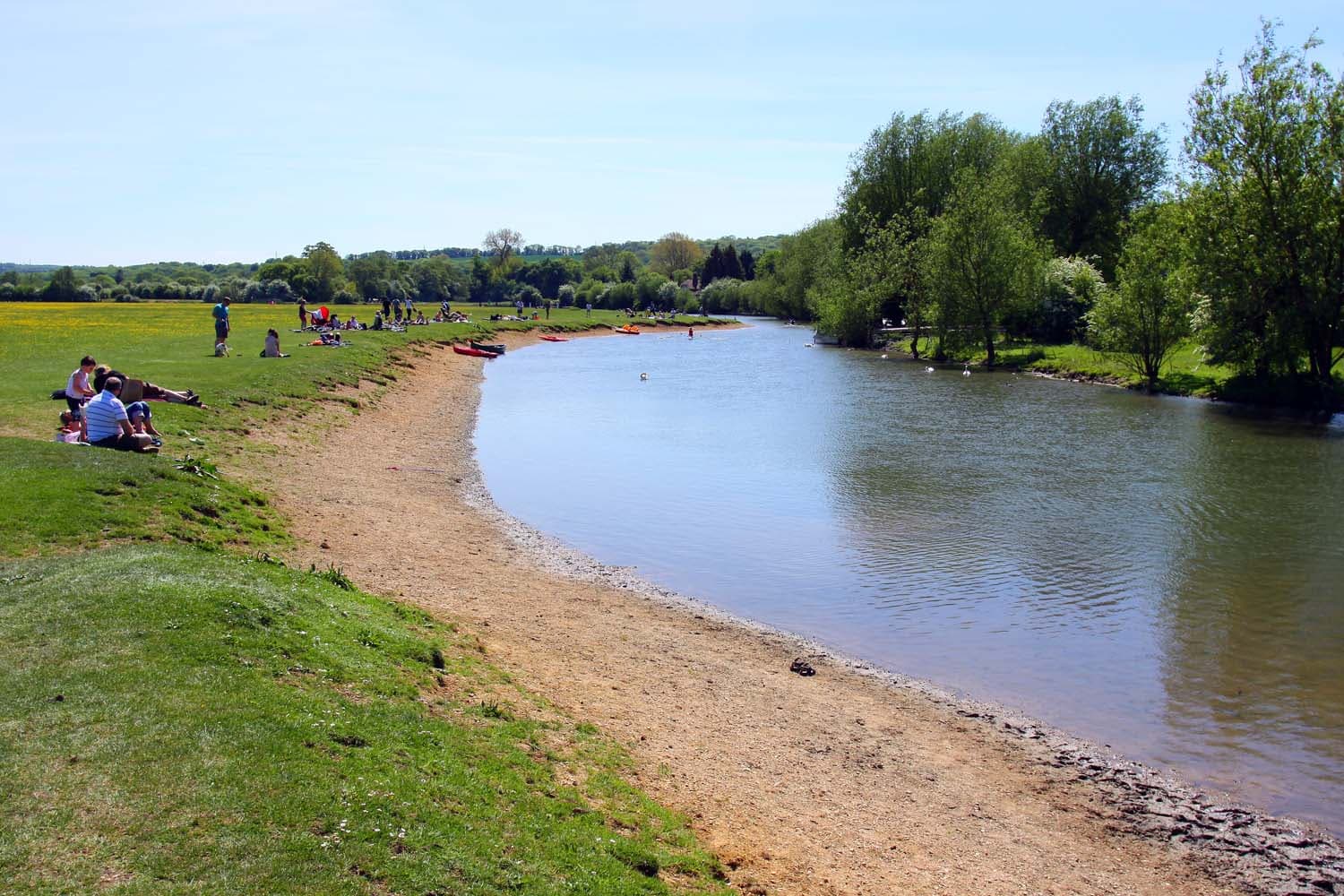
Oxford's classic river swim: Wolvercote Mill Stream, a side stream of the Thames at the northern end of Port Meadow, a short walk from the Godstow Road car park, where up to 400 people swim and paddle on hot days. It became a designated bathing water in 2022 but is rated Poor, so check the weekly sample results and storm-overflow map, and stay out after rain.

Farleigh Hungerford (River Frome)
A 70-metre stretch of the River Frome above a slippery weir, used since 1933 by Farleigh and District Swimming Club, believed to be the oldest river swimming club in the country. The water is about 2.4 metres deep, cool and never clear, with shallows by the weir for easing in. You need annual club membership, and it is wise to skip a swim after heavy rain.

Grantchester Meadows, River Cam
The stretch of the Cam running along Grantchester Meadows, between Newnham and Grantchester village, has been swum for more than 500 years, by Rupert Brooke and Virginia Woolf among many others. The banks are steep and weedy in places, so find a spot where you can climb out before you get in. Local testing suggests cleaner water towards the Newnham end; skip it for a few days after heavy rain.
Pells Pool
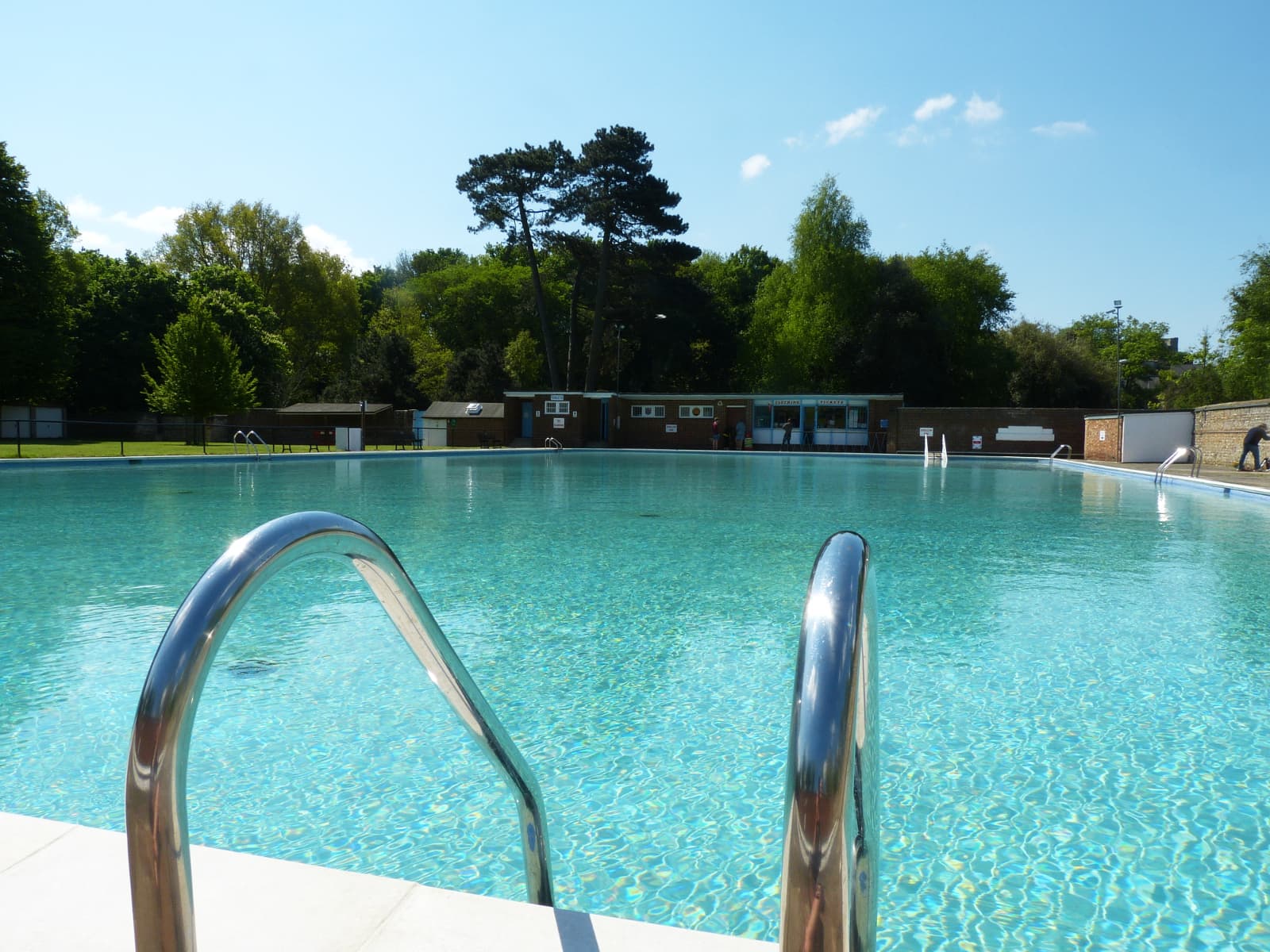
Pells Pool in Lewes has drawn spring water from the chalk beneath it since 1861, and its operators describe it as the oldest freshwater outdoor public pool in the UK. It is unheated, so the 46-metre pool starts the season cold and warms through the summer; book a lane session ahead, bring plenty of warm layers and leave the camera at home, as photography is not allowed.

Loch Morlich
Loch Morlich lies about 300 m up in Glenmore Forest below the Cairngorm plateau, and the long sandy beach at its eastern end is a designated bathing water rated Excellent. SEPA describes it as a shallow loch, and only non-motorised craft are allowed, so it is a calm place for a swim. Expect cold water; parking at the beach is charged, and its toilets open from April to October.

North Berwick, Milsey Bay
Milsey Bay, North Berwick's East Sands, is a 1.1 km sandy beach looking straight out to the Bass Rock and its seabird colony, close to the Scottish Seabird Centre. At low tide the sea can be 170 m out, so aim for the higher half of the tide; a tide-filled paddling pool on the sands holds water when the sea is out. Trains run direct from Edinburgh.

Beckenham Place Park Lake
Beckenham Place Park's lake is London's first purpose-built swimming lake: 285 metres long and up to 3.5 metres deep, set in open parkland in Lewisham. PTP Coaching runs it as supervised, pre-booked sessions, checking every swimmer in at the water's edge. Facilities by the lake are basic, so arrive ready to swim, and towel off straight away afterwards to avoid swimmer's itch.

West Reservoir, Stoke Newington
Built in 1833 to store and clean New River water, this 30-acre reservoir in Stoke Newington now hosts supervised open-water swimming alongside sailing and kayaking. Swims are booked through the Better app, last up to an hour and follow marked loops of up to 300m. A tow float and bright hat are compulsory, and the team recommends a wetsuit once the water falls below 14°C.

Llyn Gwynant
Llyn Gwynant is a small glacial lake on the River Glaslyn in the Nant Gwynant valley, about 3 km from Snowdon, and the view over the lake towards Moel Hebog is one of the most photographed in Eryri. The A498 runs along its bank, so getting to the water is easy. Canoes and kayaks share the lake, so wear a bright cap and stay close to the shore.

Helen's Bay
Helen's Bay is a half-kilometre sandy beach on the shore of Belfast Lough, part of Crawfordsburn Country Park, with rocks at each end and the coastal path running behind it. The village, which has a railway station, sits at its western end, and the country park's café and visitor centre are nearby. DAERA advises against swimming during heavy rain and for up to 48 hours after it.

Portstewart Strand
Portstewart Strand is two miles of National Trust sand backed by 6,000-year-old dunes, running west from the town towards the mouth of the River Bann. Swim between the red and yellow flags when lifeguards are on duty in June, July and August, and keep an eye on the incoming tide. Blue-green algae from Lough Neagh can occasionally reach the beach via the Bann, so look out for notices on site.

Sandbanks Beach
A long sweep of soft sand on Poole Bay where the water stays shallow a long way out, which suits steady lengths parallel to the shore. RNLI lifeguards cover it from late March to late September and the bathing water is rated Excellent. Stay well away from the harbour mouth at the western tip, where the tide runs hard past the chain ferry.

Shoalstone Pool
A 53-metre seawater pool built into the rocks at Shoalstone Point, topped up straight from Torbay and usually a degree or two warmer than the open sea. Families use the shallow end while lane swimmers count lengths with the whole bay in view. Entry is free and there is no need to book, but the volunteer charity that runs it relies on donations, so bring a few pounds.

River Dart at Spitchwick
A wide bend of the River Dart beside the grassy common just above New Bridge, where Dartmoor families have come to paddle, picnic and swim for generations. In 2023 the estate that owns the banks put up signs asking swimmers to refrain, to protect them, so check the signage and tread lightly. The river can run high after rain; paddlers read the level from the rock ledge by the bridge.
Hathersage Swimming Pool
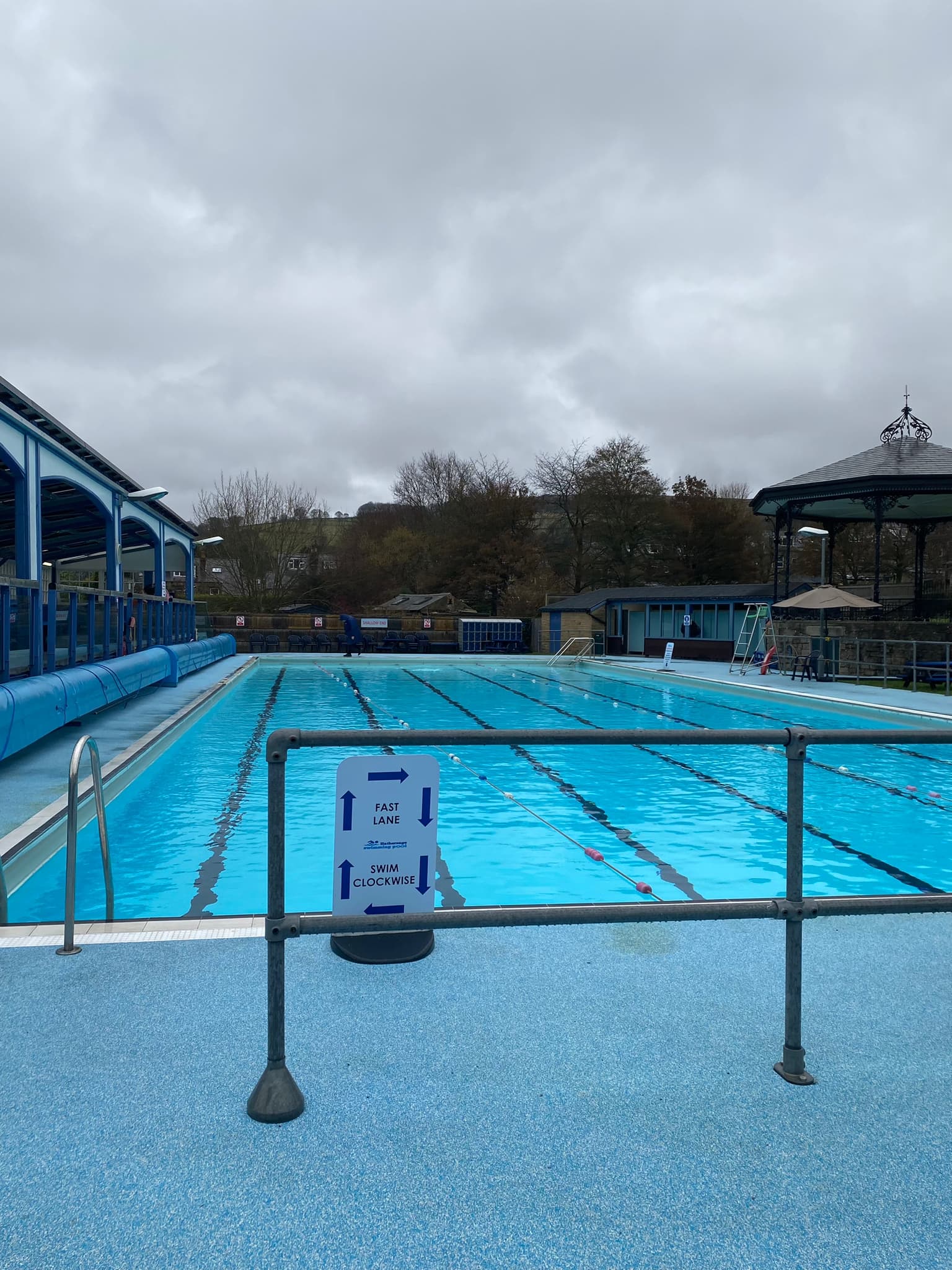
A 30-metre heated open-air pool in the Peak District village of Hathersage, opened in 1936 and still with its bandstand and veranda beside the water. It keeps a summer and a winter timetable, so regulars swim here through the whole year, with Stanage Edge and the moors above the village. Book summer sessions online, as walk-in entry depends on what is left.

Loch Ness at Dores
Dores is a small gravel-and-sand bay at the north-east end of Loch Ness, about 10 km from Inverness, and one of only three inland bathing waters in Scotland. The beach slopes into dark, peaty water in a loch that reaches about 230 m at its deepest, so stay close to the shore. SEPA advises against swimming during heavy rain or for a day or two afterwards.

St Monans Tidal Pool
St Monans' tidal pool is a long, concrete-walled sea pool on the rocky shore east of the village, beside the Fife Coastal Path and a short walk from the old salt-works windmill. It refills on the high tide and keeps its water as the sea drops away. An old council sign says the pool is no longer maintained and bathers use it at their own risk, so check the depth before you swim.

Rhossili Bay
Rhossili's three miles of sand face straight into the Atlantic, with Worm's Head at the southern end and Rhossili Down rising behind the dunes. The swell that draws surfers can make swimming lively, so pick a calm day with small waves. It is a long walk down steps from the village, where the car park, toilets and outdoor shower are, so pack light.

Treyarnon Bay Tidal Pool
A partly built rock pool on the north side of Treyarnon Bay, around eight feet deep in places and topped up by every tide. At low water it gives a sheltered swim a few metres from the Atlantic surf, and older children and families use it as a natural swimming pool. Check tide times before you go: the sea floods quickly around Trethias Island at the end of the beach and people do get cut off.
Local guides
How to Check Water Quality Before You Swim in England
Bathing water ratings, pollution risk forecasts, sewage alerts and overflow maps explained, plus rainfall rules of thumb and what to do after a storm swim.
Swimming at Hampstead Heath Ponds: A Local Guide
Kenwood Ladies', Highgate Men's and the Mixed Pond: who each is for, booking, winter hours, water temperatures by month, safety rules and how to get there.
London Lidos and Open-Water Swims: A Local Guide
Tooting Bec, Brockwell, Parliament Hill, London Fields and the Serpentine, plus the Hampstead ponds: size, heating, winter opening and how to book each one.
Free · weekly · no account
The week’s best swims in UK
Every Monday: which day looks best at the hand-checked spots, scored from the forecast. One email a week, unsubscribe any time.